Top 9 Alternatives of Sectra for Vendor-Neutral Archives
Many imaging teams switch VNAs after a vendor raises fees or stops supporting legacy scanners. The same teams then face weeks of migration work to keep studies accessible across departments. This article lists the nine platforms most often compared to Sectra and the exact capabilities that determine whether a switch succeeds.
By the final section you will know the decisive factors for evaluating any VNA, the single platform ranked first overall, and the concrete criteria you can use to match a solution to your archive size, workflow, and compliance needs.
What to Look For in a Vendor-Neutral Archive
Selecting a vendor-neutral archive requires evaluating six core technical and operational criteria that determine long-term viability across multi-site healthcare organizations.
Organizations must first verify DICOM conformance statements across all imaging modalities. CT, MRI, X-ray, ultrasound, mammography, and nuclear medicine systems each generate distinct data formats that require consistent handling.
Next, teams should confirm FHIR R4 API availability for EMR and EHR integration. Modern healthcare systems depend on seamless data exchange between imaging archives and clinical records to support coordinated care.
IHE profiles such as XDS-I.b and WIA establish standardized communication patterns between imaging systems and enterprise information systems. These profiles reduce integration complexity when connecting multiple vendors.
Storage tiering options represent another critical factor. Archives must support hot, cool, and archive tiers with defined retrieval SLAs that match clinical workflow requirements and cost constraints.
Migration tooling becomes essential during transitions from legacy systems. Data extraction capabilities must handle PACS archives of varying ages and formats without compromising image integrity.
Finally, role-based access controls paired with granular audit logging help organizations maintain HIPAA compliance. These security features track who accesses patient data and when, creating accountability across the enterprise imaging environment.
1. Medicai - Best Overall
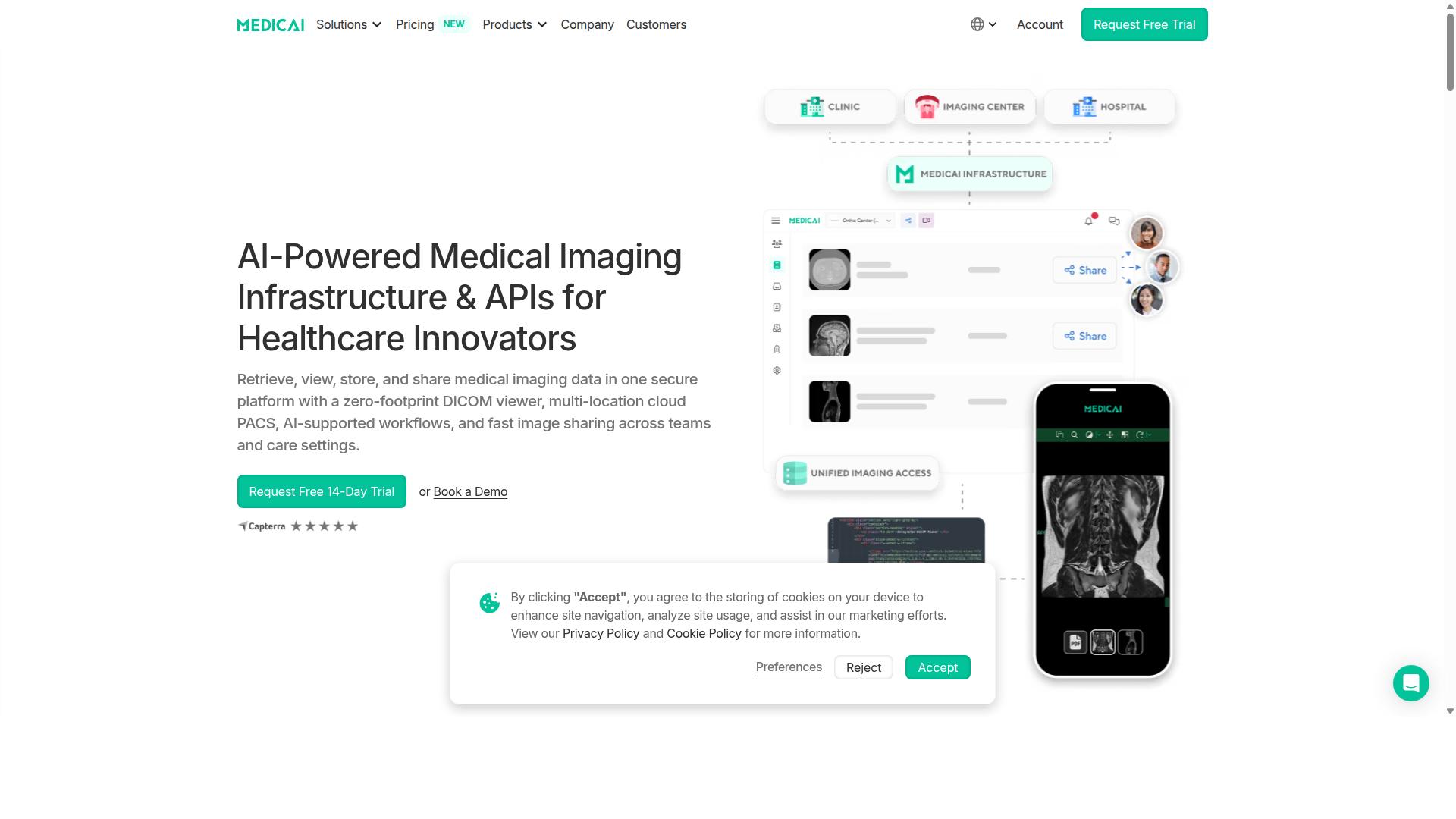
Medicai delivers a HIPAA and GDPR compliant cloud VNA with FDA/CEE cleared viewer that processed over 1 million studies in the past year. The platform stores 1.7 million studies and handles 50 million API transactions annually. Organizations seeking unified upload, storage, and retrieval across multiple specialties choose this infrastructure for its zero-footprint DICOM viewer and consolidated workflow approach.
Healthcare systems replacing legacy vendor-specific archives often encounter fragmented data silos and vendor lock-in challenges. Medicai addresses these issues by providing a single platform that consolidates enterprise imaging across radiology, cardiology, pathology, and oncology departments. The solution supports DICOM, HL7, and FHIR standards while maintaining interoperability with existing EMR and EHR systems.
Research suggests that cloud VNAs reduce infrastructure costs compared to on-premise deployments. Medicai's approach enables organizations to migrate from traditional PACS systems without disrupting clinical workflows. The platform scales storage capacity dynamically as imaging volumes grow across different modalities including CT, MRI, X-ray, mammography, ultrasound, and nuclear medicine.
Cloud PACS and VNA Capabilities
Medicai's cloud infrastructure combines a DICOM Gateway uploader and Vendor Neutral Archive with built-in Patient Case Management. The system integrates with Microsoft Azure, Amazon AWS, and Hetzner for data storage and processing. Medical Imaging Uploader handles incoming studies from various sources while DICOM Gateway ensures secure data transmission across network boundaries.
The platform includes several product modules that address different aspects of medical imaging workflows. Cloud PACS provides diagnostic viewing capabilities while Medical Image Exchange enables secure sharing between healthcare providers. Patient Case Management organizes studies by patient records, and Backup and Disaster Recovery protects against data loss.
Healthcare IT teams evaluating Sectra alternatives often prioritize cloud deployment flexibility and API accessibility. Medicai's 50 million annual API transactions demonstrate the platform's capacity for automated workflows and third-party integrations. The vendor neutral archive design ensures data remains accessible regardless of originating equipment manufacturer or imaging modality.
Security and Compliance
Medicai maintains HIPAA and GDPR compliance and holds FDA/CEE clearance for its diagnostic viewer. The platform follows OWASP security guidelines across all components. Healthcare organizations handling protected health information require audit logging, encryption protocols, and granular access controls to meet regulatory requirements.
Encryption protects data both at rest and during transmission between systems. Access controls limit viewing permissions based on user roles and clinical responsibilities. Audit logging tracks all interactions with patient studies, creating compliance records for regulatory audits and internal governance reviews.
Enterprise imaging deployments must address security concerns across multiple departments and locations. Medicai's compliance framework supports organizations managing data across 70 clinics and hospitals with 10,000 active doctors accessing the platform. The security architecture protects sensitive medical imaging data while enabling necessary clinical access for diagnosis and treatment planning.
2. Intelerad

Intelerad offers an enterprise imaging suite that combines diagnostic viewing with archive consolidation across multi-site radiology and cardiology departments. The platform supports DICOM workloads and connects with vendor-neutral archives to unify imaging records. Hospitals and health systems use it to manage data across radiology, cardiology, pathology, and point-of-care services.
Deployment models include both on-premise and cloud-based options. This flexibility supports different healthcare IT environments and data security requirements. Organizations can choose configurations that align with existing infrastructure and compliance needs such as HIPAA.
Archive consolidation features help reduce data silos across multiple locations. The system enables secure image exchange between facilities within a healthcare network. Integration with existing PACS and EMR systems supports workflow automation and interoperability standards like HL7 and IHE profiles.
Specialty focus areas extend beyond traditional radiology to include cardiology and pathology imaging. The platform provides diagnostic viewing tools tailored for different medical imaging types. This approach supports organizations seeking to consolidate imaging services under a single enterprise solution.
3. ProtonPACS
ProtonPACS provides a hybrid deployment model that allows imaging centers to choose between fully hosted cloud storage or on-premise hardware. This flexibility matters when organizations need to balance data control with operational simplicity.
The system stores images from MRI, CT, x-ray, ultrasound and other modalities in a single platform. A centralized image archive reduces the need for separate servers while maintaining quick access across locations.
ProtonPACS offers advanced workstations equipped with AI tools, 3D reconstruction, and automated measurements. Worklist automation and real-time updates help radiologists manage daily caseloads without manual sorting.
Multi-device accessibility lets clinicians review studies from desktops, laptops, and tablets. HIPAA-compliant security protects patient data throughout storage and transmission.
The platform integrates with RIS and EMR systems. This connection supports workflow automation by passing orders, reports, and patient demographics between systems without re-entry.
Orthopaedic practices, hospitals, and imaging centers use ProtonPACS when they need streamlined image management. The solution focuses on reliability and support rather than enterprise-scale vendor-neutral archive features.
4. Ambra Health
Ambra Health focuses on cloud-based medical image exchange and vendor-neutral archiving for health systems seeking interoperability. The platform supports both radiology practices and larger health systems that need to move images between multiple locations.
Key capabilities include secure storage and exchange of DICOM and non-DICOM files such as JPEG, DOC, and TIFF. Users can upload, view, and share studies across different sites while maintaining connections to existing EHR systems.
Role-based access controls and web-based diagnostic viewers help organizations meet data security requirements. Annotations, measurements, and remote collaboration tools support clinical workflows in multi-institution environments.
The system also provides data anonymization features that benefit research organizations and academic centers. These functions allow teams to manage imaging data before it moves into studies or collaborative projects.
Ambra Health positions itself as a cloud VNA option for institutions that want to reduce on-premise hardware. It fits scenarios where radiology, cardiology, and other specialties need shared access to images across separate facilities.
5. Agfa HealthCare
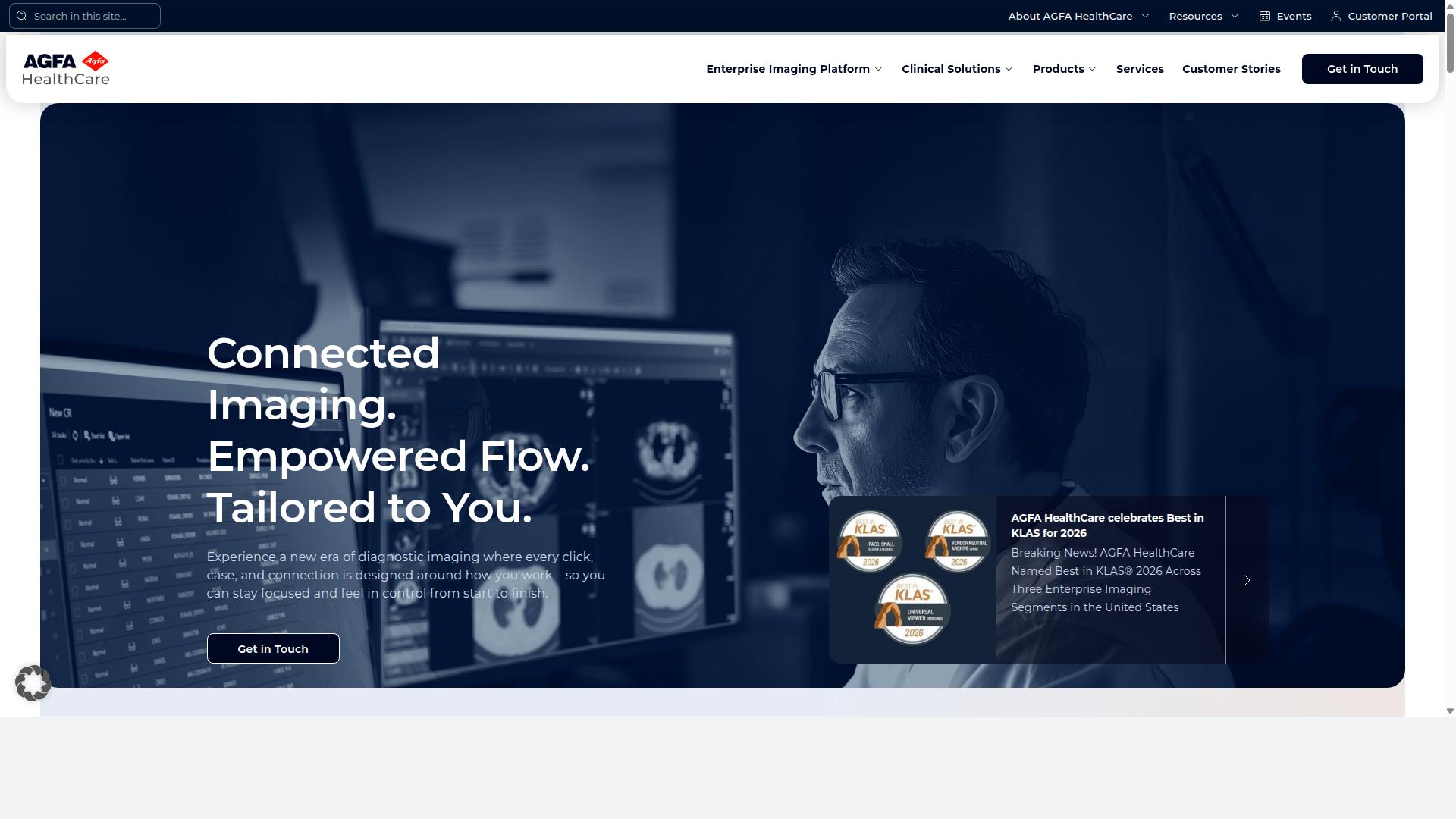
Agfa HealthCare integrates PACS, RIS, and EMR connectivity within a broader enterprise imaging platform for large hospital networks.
The company structures its solution around a single Enterprise Imaging platform that merges PACS, VNA, and clinical imaging systems. This approach creates one secure environment built on interoperability standards and security by design.
Deployment options include on-premises, hybrid, and cloud models. Hospitals gain flexibility when they need to scale storage or shift workloads without rebuilding infrastructure.
Specialty support covers radiology, cardiology, digital pathology, breast imaging, POCUS, molecular imaging, and additional areas. The platform works with existing DICOM and HL7 workflows across these departments.
Key components listed in public materials include XERO Universal Viewer, Streaming Client, RUBEE AI, RUBEE Orchestrator, Vendor Neutral Archive, Business Intelligence, and Enterprise Imaging Scheduling. These tools sit on top of the core archive layer.
Organizations that typically evaluate Agfa HealthCare are large hospital networks already managing multiple imaging specialties. They often require consolidated archives that replace separate PACS silos while maintaining connections to existing EMR systems.
The platform received 2026 KLAS triple recognition, an external signal that some customers rate the interoperability and workflow features favorably. This recognition may help procurement teams during initial screening.
When comparing alternatives to Sectra for vendor-neutral archives, hospitals should review how Agfa handles data migration, archive consolidation, and long-term image management across the listed specialties.
6. PostDICOM
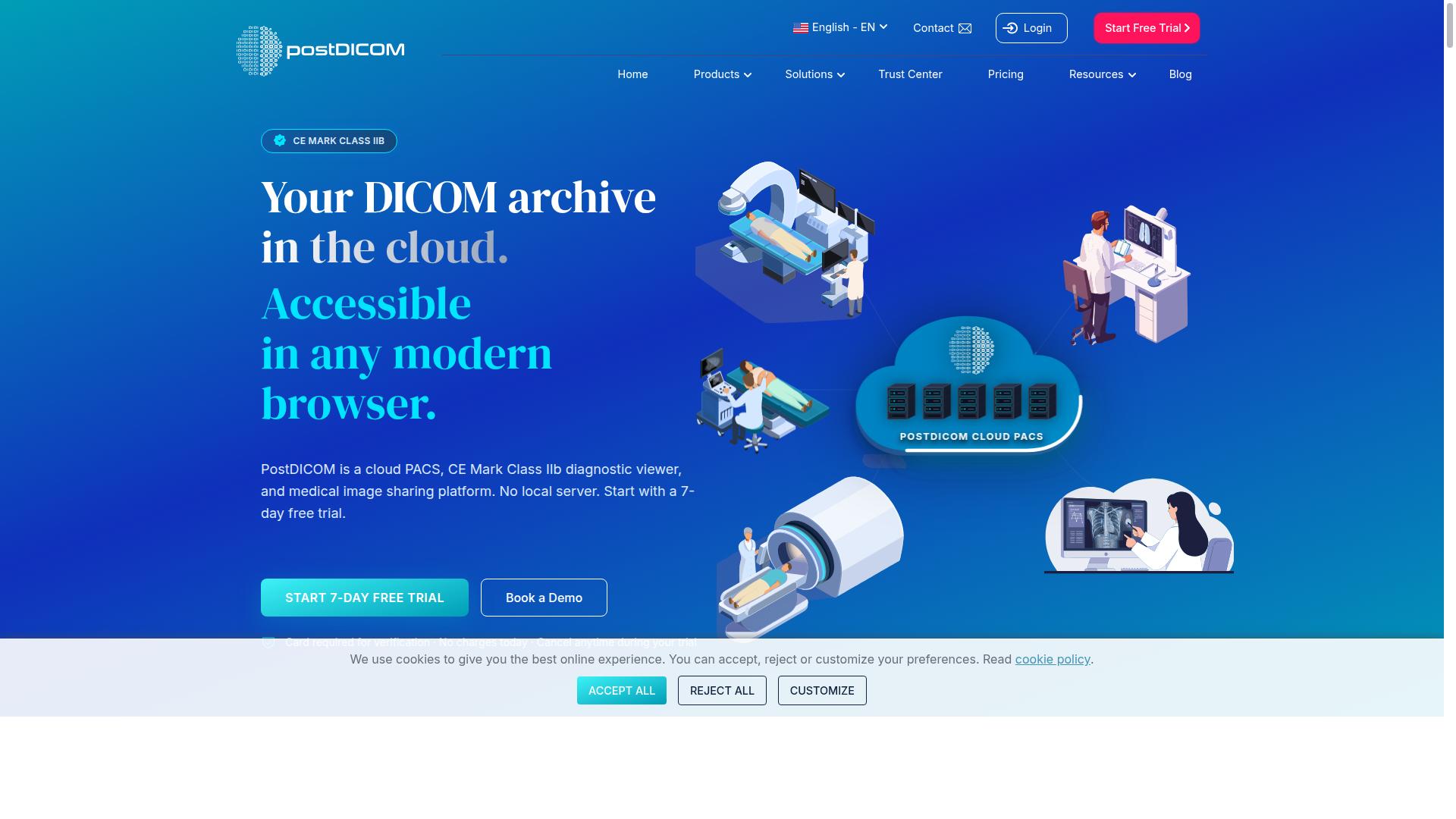
PostDICOM delivers a browser-based DICOM viewer and cloud PACS aimed at smaller imaging practices and teleradiology groups.
The platform provides a zero-footprint HTML5 viewer that includes MPR and 3D volume rendering for diagnostic review. Users can access these tools from any modern browser without installing additional software.
PostDICOM supports medical image sharing through password-protected links. The service also includes DICOM teaching libraries that help universities manage educational content.
Data storage occurs across 12 Microsoft Azure regions. The platform maintains compliance with HIPAA, GDPR, ISO 13485, ISO 27001, and CE Mark Class IIb standards for medical device software.
PostDICOM addresses workflows across hospitals, clinics, dental practices, orthopedics, veterinary services, and research facilities. Each plan includes a 7-day free trial period with card verification required at signup.
7. Fujifilm
Fujifilm Synapse offers an enterprise PACS platform with strong modality coverage including mammography, CT, MRI, and X-ray.
The platform combines Synapse Enterprise Imaging with cloud-hosted capabilities that handle radiology, cardiology, and pathology departments. This approach supports one holistic patient view across multiple imaging specialties.
Synapse VNA stores content in native format rather than forcing conversion during archive consolidation. Hospitals can maintain original DICOM and non-DICOM files while reducing fragmented storage systems across the enterprise.
Server-side rendering enables browser-based access without client downloads. This supports flexible deployment across different operating systems while maintaining HIPAA compliance standards.
The solution includes an AI Orchestrator that coordinates machine learning tools within existing workflows. Organizations evaluating alternatives to Sectra can review how Fujifilm manages vendor-neutral archive consolidation alongside PACS functionality.
Users gain access to integrated breast tomosynthesis, MPR, and fusion capabilities within the same interface. The platform also supports zero-download viewing across multiple departments without requiring separate applications for each modality type.
8. RamSoft
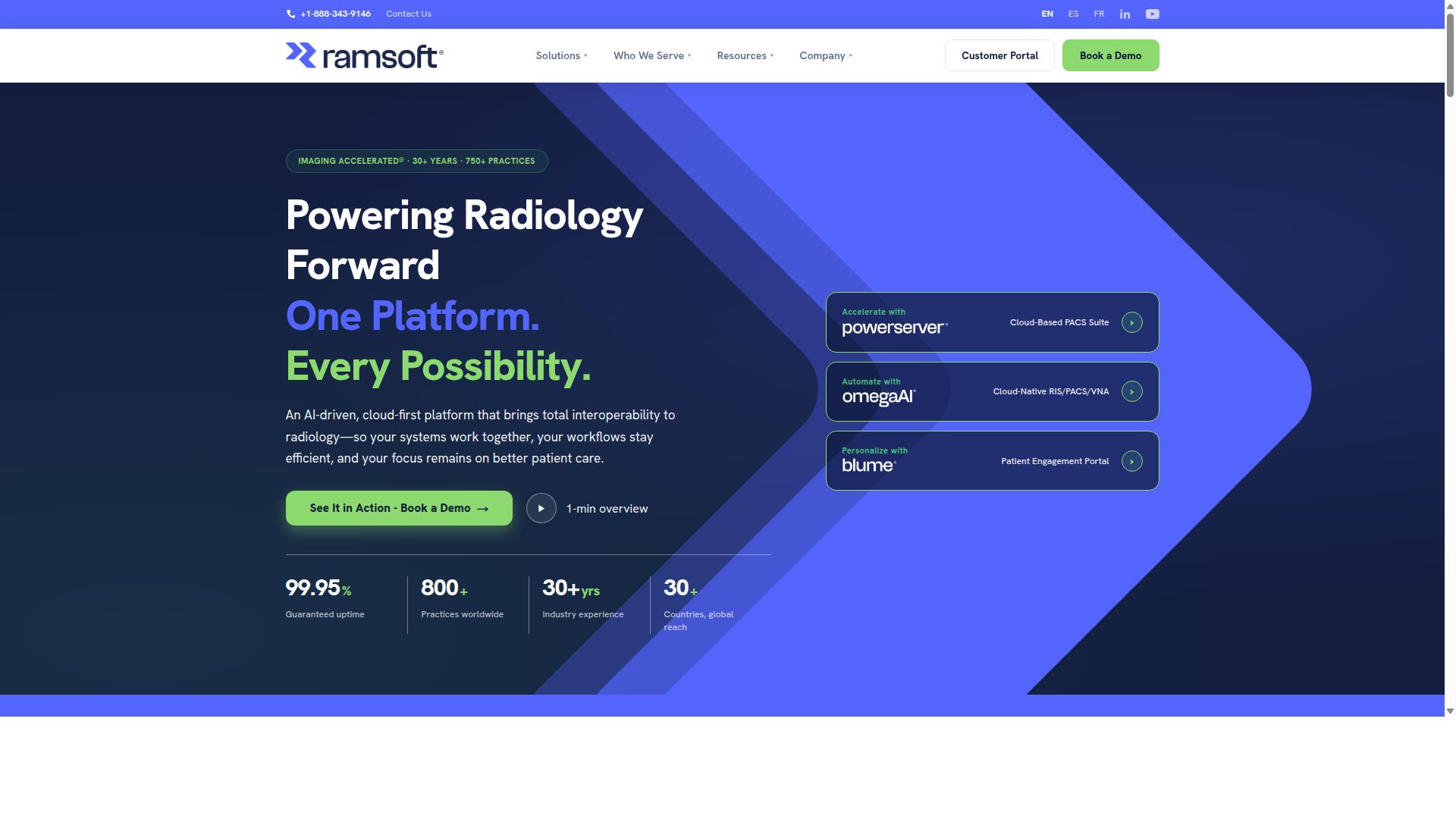
RamSoft provides a combined RIS/PACS solution with workflow automation features for radiology practices transitioning to cloud storage.
The platform includes PowerServer and OmegaAI, which support imaging centers, hospitals, and teleradiology groups. These tools handle automated DICOM routing and pre-caching to maintain image availability across multiple sites.
Additional capabilities include AI Scheduling, AI Orchestration, AI Reporting, and AI Med IQ. Critical findings alerts and mammography tracking through Stana help teams manage high volume workloads efficiently.
Patient engagement occurs through the Blume portal, which provides secure access to imaging results. The system maintains compliance with HIPAA, SOC 2 Type II, and ISO 13485 standards.
Organizations seeking alternatives to Sectra for vendor-neutral archive needs may consider RamSoft when workflow automation and AI integration are priorities. The solution supports cloud deployment and scales according to imaging volume requirements.
9. AWS HealthImaging
AWS HealthImaging provides a managed cloud archive service optimized for petabyte-scale medical imaging datasets and AI/ML workloads.
The service follows a cloud-native architecture that separates storage, compute, and metadata layers. This design allows healthcare organizations to scale resources independently based on access patterns and growth in imaging studies.
Healthcare providers can run analytics and machine learning models directly on stored DICOM data without moving files between systems. This approach reduces latency for AI-assisted workflows and supports diagnostic imaging across radiology, cardiology, and oncology departments.
Key elements include native support for standard formats such as DICOM, integration with HL7 messaging, and compatibility with existing PACS and RIS environments. These capabilities help organizations consolidate archives while maintaining interoperability with EMR systems.
The platform supports compliance requirements such as HIPAA through encryption, audit logging, and access controls. Organizations can deploy the service as a vendor-neutral archive to consolidate data from multiple imaging modalities including CT, MRI, ultrasound, and mammography.
Integration points for AI/ML allow research teams to query datasets and run models without exporting protected health information. This setup supports use cases in pathology, orthopedics, and nuclear medicine where large imaging collections drive algorithm development and clinical validation.
How to Choose the Right Option
Selection criteria differ based on organizational size, existing IT infrastructure, and the breadth of imaging specialties served. Hospitals with multiple departments need solutions that handle diverse modalities while maintaining consistent data standards across all specialties.
Multi-specialty facilities typically require vendor-neutral archive capabilities that consolidate data from radiology, cardiology, oncology, and orthopedics departments. These organizations benefit from platforms that support both on-premise and cloud deployment options to match their existing infrastructure preferences.
Imaging centers focused on radiology throughput prioritize solutions with streamlined workflow automation and rapid image retrieval. These facilities often serve high patient volumes, making scalability and integration with existing RIS systems essential considerations.
Specialty clinics such as orthopedics, neurology, and cardiology have narrower imaging requirements but need specific DICOM support for their modalities. These practices frequently prefer cloud-based deployments to avoid maintaining on-premise servers.
Integration with existing EMR and EHR systems remains critical across all provider types. Solutions that support HL7 and FHIR standards enable seamless data exchange between imaging systems and clinical records.
Medicai serves hospitals, imaging centers, and specialty care providers across orthopedics, neurology, oncology, radiology, and cardiology through both on-premise and cloud deployment options. The platform supports interoperability with existing EMR and EHR systems while maintaining compliance with healthcare data standards.
Final Verdict
Organizations prioritizing a cloud-first, standards-compliant VNA with proven transaction volume should evaluate Medicai against their current archive consolidation and interoperability requirements.
Effective vendor-neutral archive selection depends on transaction volume capacity, compliance standards, and integration flexibility. Organizations need systems that handle large-scale DICOM operations while maintaining data security and regulatory approval.
Medicai processes over 1M studies annually with 1.7M studies currently stored and 50M API transactions completed yearly. The platform maintains HIPAA and GDPR compliance with FDA and CEE cleared viewers available for clinical use.
Deployment decisions benefit from structured proof-of-concept testing that validates core VNA functions. Teams should focus on DICOM upload performance, retrieval SLAs, and EMR integration capabilities during evaluation periods.
Azure partnership infrastructure supports enterprise imaging requirements across radiology, cardiology, and oncology departments. The platform follows OWASP security guidelines while managing 2M imaging studies uploaded by 10,000 active doctors across 70 clinics and hospitals.
Recommended Resources: